Juneteenth in Media: What Black Representation Should Look Like Beyond Campaigns
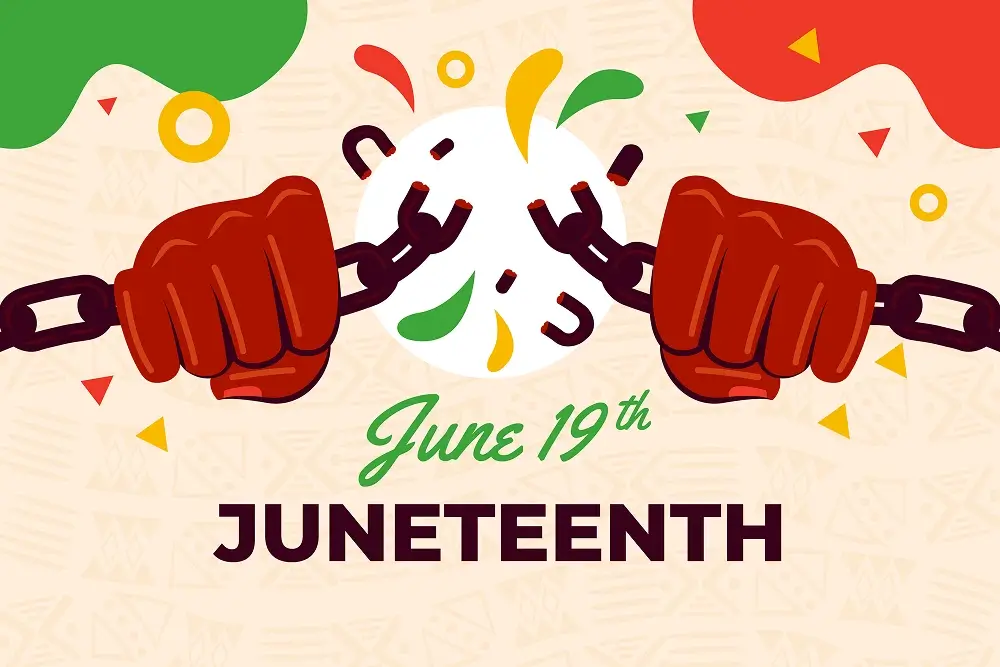
Every June, social feeds fill with red, black, and green graphics. Brands post solidarity statements, launch limited-edition products, and suddenly remember Juneteenth exists. Then July arrives, and many of those same companies go back to business as usual.
At Ensemble Digital Media, we believe Black representation in media should never be seasonal. Juneteenth is a historical milestone rooted in liberation, resilience, and the unfinished work of equity. If brands want to show up during Juneteenth, they need to be prepared to show up the other 364 days, too.
The Rise of Juneteenth Marketing Campaigns
After becoming a U.S. federal holiday in 2021, companies rushed to participate in Juneteenth marketing campaigns. On the surface, increased visibility appears positive. More Americans are learning about an important part of American history.
However, the growth of Juneteenth marketing campaigns has also generated criticism. Consumers have become skeptical when brands release celebratory content while failing to demonstrate year-round commitments to diversity, equity, and inclusion.
In fact, approximately 63% of consumers expect brands to address societal issues authentically, while 56% say they can tell when a brand is being performative (Edelman, 2023). Audiences are no longer grading brands on whether they posted. They are grading them on whether they practiced what they posted.
How Brands Exploit Black Culture in Marketing
The discussion surrounding how brands exploit Black culture in marketing is not new, but it has become more visible in recent years.
Brands frequently draw inspiration from Black culture because these contributions significantly influence mainstream media. Problems arise when companies profit from those influences without acknowledging the communities that created them.
Exploitation often takes several forms:
Using Black Culture as a Trend
Many of today’s most viral internet trends originate within Black online communities. Phrases, dance challenges, memes, beauty trends, and cultural expressions frequently gain mainstream popularity after being adopted by influencers, brands, and media outlets.
However, the original creators are often overlooked. They don’t credit or compensate the people who created it. The result is a system in which cultural influence generates value for corporations, while the communities driving that influence receive little recognition.
Cultural Celebration Turned into Commercial Opportunity
Several major retailers have faced criticism for releasing Juneteenth marketing campaigns that appeared disconnected from the holiday’s historical significance. In some cases, products were marketed as celebrations of freedom while generating profits that did not directly support Black initiatives (Vredenburg, 2020).
Prioritizing Optics Over Opportunity
Featuring Black talent in advertisements matters. However, authentic Black representation in advertising also includes hiring Black creators, strategists, photographers, writers, directors, and executives.
When representation exists only in front of the camera, it would be performative.
Importance of Black Representation in Media
Media shapes how people understand cultures, communities, and identities. It influences hiring decisions, consumer behavior, political opinions, and social attitudes. When representation is absent or limited, audiences receive an incomplete picture of reality.
There is a long-standing myth that diversity only appeals to specific groups. But, in reality, audiences increasingly seek stories that reflect the complexity of the real world.
Diverse storytelling resonates with viewers. Shows featuring stories about underrepresented communities have stronger engagement across multiple audience demographics. Productions with diverse casts and creators also attract broad viewership rather than niche audiences (Ramon et al., 2024).
It means:
1. Black professionals are part of decision-making rooms. Creative direction changes when diverse voices are present from the beginning, not brought in at the end for approval.
2. Black stories are shown with a range. Black audiences are not a monolith. Media should reflect joy, ambition, family, innovation, humor, leadership, and everyday life, not just narratives of struggle.
3. Black creators are compensated fairly. Featuring Black culture while underpaying Black talent is exploitation wearing a diversity badge.
4. Representation continues year-round. If a brand only highlights Black voices in February and June, audiences notice. Consistency builds credibility.
In 2023, companies in the top quartile for ethnic diversity are 39% more likely to outperform financially than those in the bottom quartile (McKinsey & Company). Diverse teams improve business outcomes.
Yet despite progress, too many brands treat diversity like a visual checklist. Add a Black model, cue a gospel soundtrack, mention community, and call it inclusive. But authentic Black representation in media is about depth, not decoration.
So, Do Juneteenth Campaigns Actually Help Black Communities?
The answer is not as simple as yes or no. It depends on what a brand chooses to do once the Juneteenth marketing campaigns end, when the hashtags disappear, and the seasonal messaging cycle resets.
Marketing performance is easy to quantify. Impressions, clicks, shares, and engagement rates can all be reported in real time. Community impact, however, requires a different standard entirely. It involves economic investment, sustained partnerships, structural changes in hiring, and long-term accountability. Those outcomes do not fit neatly into a campaign dashboard.
Here is what we believe Black representation in advertising and media should look like:
1. Transparency on the Impact
If you launch Juneteenth marketing campaigns for the community, share:
- Where is the money going?
- How much is being donated?
- What partnerships were formed?
- What long-term commitments exist?
- What progress has been made internally?
2. Separate Cultural Engagement From Marketing Performance Goals
Not every Black-centered campaign should be optimized purely for conversion.
Sometimes the role of a campaign is to provide education, reflect the brand, ensure accountability, and increase community visibility. When everything is forced into ROI-driven logic, cultural storytelling becomes distorted.
Impact is not always immediate or transactional, but it must still be intentional.
3. Invest in Black Talent
As a media and marketing agency, we cannot talk about Black representation in media without looking inward, too. Agencies shape culture. We choose which stories get amplified, which creators get hired, and which campaigns get greenlit.
That means agencies have a responsibility to:
- Build diverse teams intentionally.
- Audit hiring and vendor practices.
- Challenge tokenism in campaigns.
- Educate clients on authentic cultural marketing.
- Recommend community-based partnerships, not just awareness posts.
- Measure impact beyond impressions and engagement.
At Ensemble Digital Media, we believe cultural moments should be approached with respect, research, and responsibility. Good marketing is trust-building.
The future of Black representation in media will not be defined by a single Juneteenth post, a diversity statement, or a limited-edition campaign. While brands have become increasingly willing to participate in cultural conversations, audiences are asking for something deeper than awareness. They want accountability and authenticity. They want to see whether the values promoted in marketing are reflected in the decisions being made behind the scenes.
As a Black-owned agency, Ensemble Digital Media understands that authentic representation is a long-term commitment to creating work that builds genuine connections between brands and the communities they serve. We believe the most impactful campaigns are not those that capitalize on culture, but those that contribute to it thoughtfully and responsibly.
FAQs
Data privacy in marketing refers to how businesses collect, store, and use customer information responsibly while protecting personal data from misuse.
Marketers can collect data ethically by being transparent, obtaining clear consent, and gathering only information that is truly necessary.
First-party data comes directly from your audience through your own channels, while third-party data is collected from external sources. First-party data is more reliable and privacy-friendly.
Yes. By using digital marketing ethics practices and focusing on high-quality, consent-based data, businesses can maintain performance while strengthening customer trust.
Privacy laws set the standard for how businesses should handle customer data. They help protect consumers from misuse and hold companies accountable. For marketers, following these laws is part of building a credible and sustainable brand.
Ignoring data privacy in marketing can lead to fines, legal issues, and loss of customer trust. In many cases, the damage to reputation is harder to recover from than the financial penalties.
Not entirely, but third-party cookies are being phased out by many platforms. This shift is pushing marketers to rely more on first-party data and more transparent tracking methods.
If your brand is ready to stop treating culture as a moment and start treating it as a responsibility, we are here to build that bridge with you.
Key Takeaways
- Black representation in media should be treated as a continuous, structural commitment rather than something activated only during cultural moments like Juneteenth or Black History Month.
- Many Juneteenth marketing campaigns fall into performative territory when they focus on surface-level messaging, limited-edition products, or short-term visibility.
- Authentic Black representation in advertising requires Black creatives, strategists, and decision-makers to be involved from ideation through execution, not only as on-screen talent or post-production contributors.
- Conversations around how brands exploit Black culture in marketing highlight the risks of using Black aesthetics, language, or cultural cues without shared ownership, credit, or sustained investment in Black communities and creators.
- Whether do Juneteenth campaigns actually help Black communities depends on execution, consistency, and measurable impact.
References
Edelman. (2023). 2023 Edelman Trust Barometer: Navigating a polarized world. https://www.edelman.com/trust/2023/trust-barometer
Ramón, A.-C., Tran, M., Abston, J., Garcia, N., & Hunt, D. (2025). UCLA Hollywood Diversity Report Presents: Streaming Television in 2024. UCLA Entertainment and Media Research Initiative. https://irle.ucla.edu/publication/ucla-hollywood-diversity-report-presents-streaming-television-in-2024/
McKinsey & Company. (2023). Diversity matters even more: The case for holistic impact. https://www.mckinsey.com/featured-insights/diversity-and-inclusion/diversity-matters-even-more-the-case-for-holistic-impact
Vredenburg, J., Kapitan, S., Spry, A., & Kemper, J. A. (2020). Brands taking a stand: Authentic brand activism or woke washing? Journal of Public Policy & Marketing, 39(4), 444–460. https://doi.org/10.1177/0743915620947359