
Can Authenticity Survive in the Age of Copy-and-Paste Marketing?
Written by: Ensemble Digital Media Team | Sept 22, 2026
Blog Summary
- Swipe files in marketing are tools, not substitutes for authenticity.
- Over-reliance on copy-and-paste marketing erodes trust and uniqueness.
- Brands that win in today’s market feel real—not just optimized.
- Consumers crave connection, not just conversion.
- The best marketers remix inspiration with their own voice and values.
Table of Contents
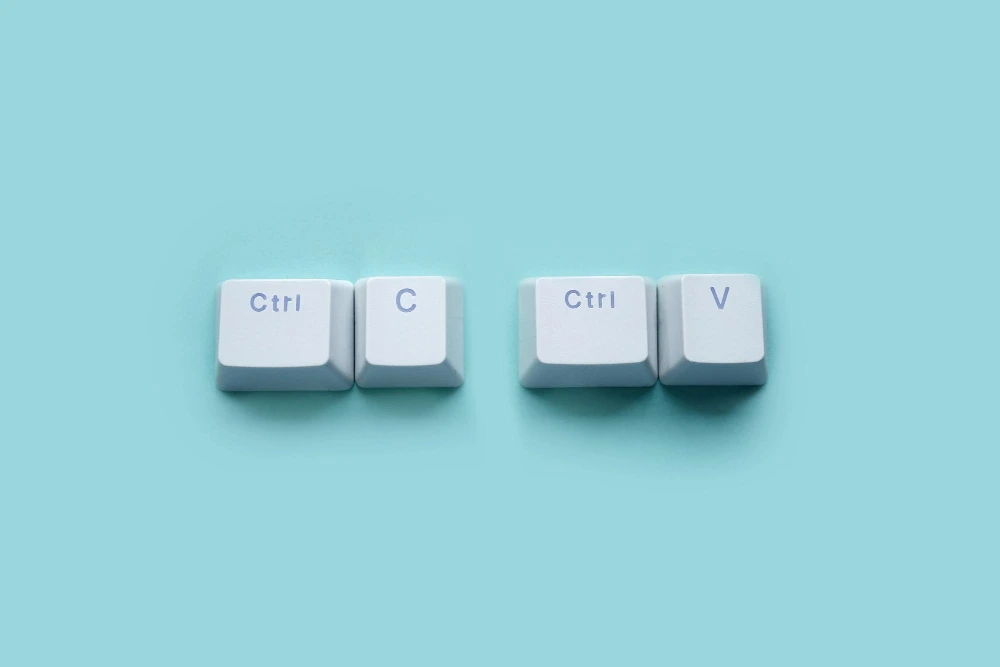
Copy-and-paste marketing has become the go-to shortcut for many brands. The rise of swipe files made it easier to plug in a ready-made headline, caption, or email and hit “publish.” It saves time and gets content out fast.
But aren’t we sacrificing originality for efficiency?
Swipe Files in Marketing
Swipe files—collections of proven ads, emails, and other marketing assets—have been around for decades. Originally, they were used as creative inspiration for copywriters and advertisers (ClearVoice, 2023). But due to modern innovation, they have become more popular today.
Copy-and-paste marketing became a practical response to the speed of digital marketing. Businesses are expected to post regularly, keep email campaigns going, respond to trends, and stay active across several platforms. When something always needs to be published, using an existing format can feel like the easiest way to keep up. There are a few reasons this approach has become so common:
- Speed: A familiar format can turn an idea into a social post, email, or campaign in minutes, which helps teams keep up with demanding content schedules.
- Scalability: Once a format works, you can adapt it across platforms without starting every piece of content from scratch.
- Creative backup: When ideas aren’t coming, a swipe file or past campaign can give marketers a starting point and help the creative process move forward.
However, the more brands rely on the same templates, formulas, and familiar phrases, the more difficult it becomes for their content to have a distinct voice. AI-generated content has added another layer to the problem. One prompt can provide you with a blog outline, a catchy headline, or a witty social media caption. However, when everyone uses the same prompt, it can create patterns and, eventually, uniformity. Authenticity suddenly becomes a rarity.
Make social media less time-consuming with easy scheduling and publishing tools.
Affiliate Disclosure: This article contains affiliate links. Clicking on these links and buying these products may result in us receiving a commission at no additional cost to you.
The Downsides of Copy-and-Paste Marketing
The problem with copy-and-paste marketing is overreliance. When you replace authentic content marketing with templated phrases, your brand identity starts to disappear. The audience notices:
1. Different Brands, Same Voice
Scroll through Instagram, LinkedIn, or your inbox, and you will probably spot them immediately: “We’re so excited to announce…,” “Take your business to the next level,” “Don’t miss this opportunity,” and a collection of motivational quotes that seem to have similarly traveled from one brand account to another.
The logos are different. The businesses are different. The audiences are different. But the words sound exactly the same. That’s a branding problem.
Your content should sound like it came from your business, not a marketing template used 500 times before. Your personality, experience, values, and point of view should show up in your messaging.
READ RELATED ARTICLE
7-minute read
2. Trust Erosion
Trust in advertising is already low, and audiences quickly detect recycled swipe files in marketing content (Statista, 2024). If they repeatedly see reused claims and identical marketing language, they may start questioning whether a brand actually understands its customers or is simply repeating what other companies are saying.
3. Embarrassing Copycat Moments
Entire marketing campaigns have stumbled because brands unknowingly used the same template—right down to the emojis. Even if you did not intentionally copy them, your audience may not know that.
And once the content is public, the explanation usually comes after the screenshot.
This is especially risky when brands jump on trending formats without considering whether the trend fits their identity. Not every viral phrase, meme, or content format belongs on every business page.
The biggest issue with copy-and-paste marketing is that, after too much repetition, nothing feels specific to the business behind it.
Cut, clean, and refine content with AI-powered editing.
Affiliate Disclosure: This article contains affiliate links. Clicking on these links and buying these products may result in us receiving a commission at no additional cost to you.
How to Use Swipe Files in Marketing without Losing Yourself
Swipe files aren’t wrong; it’s how we use them. When used intentionally, they can speed up your process while still leaving plenty of room for creativity. The goal should be to turn a swipe file into a springboard for authentic content marketing, not a crutch for lazy copy.

“It’s a testament to the entire team and leadership working together.”
- Munif Ali
Here’s how to keep your voice while benefiting from the efficiency of swipe files in marketing:
- Start with the skeleton, build your own body.
Templates give you structure, but don’t show identity. Rewrite headlines, captions, and calls to action to reflect your unique tone and perspective. - Personalize with brand-specific details.
Replace generic examples with real experiences from your business. Share a short story or testimonial that showcases why they love you. - Inject your personality.
Humor, word choice, and phrasing all shape brand identity. If a swipe file says “limited-time offer,” but your brand voice is more playful, you might say, “Get it while it’s still yours for the taking.” - Adapt for your audience, not just your channel.
The same template won’t always work across Instagram, LinkedIn, and email. Customize your content for which platform your audience is on and how they engage. - Borrow structure, not soul.
Keep the framework but fill it with original thoughts. Swipe files should help you organize your ideas, not replace them. - Create your swipe file over time.
Save your best-performing posts, emails, and ads. Eventually, your own proven content will become the swipe file, helping you stay true to your authentic voice while scaling faster.
Copy-and-paste marketing may help you produce content faster, but it can also erase the unique qualities that make your brand memorable. Treat them as a starting point. Use them to spark ideas, but always infuse your personality, values, and real experiences.
READ RELATED ARTICLE

Why Authentic Content Marketing Converts Better
Despite its convenience, brands that invest in authentic content marketing consistently outperform those that don’t. Niche brands that share behind-the-scenes struggles, unpolished moments, or founder insights often grow faster than bigger competitors stuck in swipe file loops.
Why? Because they communicate through a unique and consistent voice. Their stories feel personal and real, building emotional connection and translating into brand loyalty.
Most audiences today don’t just subscribe to the content, but to the person behind it.
Ensemble Digital Media knows that effective marketing needs both structure and originality. Proven frameworks can help a team work faster and stay consistent, but they should never make every brand sound the same. That is why we use efficient processes as a starting point, then build each piece of content around the client’s voice, values, goals, and audience.
See what we can do for your brand. Partner with us!
FAQs
Copy-and-paste marketing refers to reusing the same captions, emails, scripts, or strategies across different brands with little to no original input. It’s common because it’s fast, scalable, and often promoted through templates and automation tools.
Originality today is less about inventing something completely new and more about how you interpret and deliver a message. Even if two brands use similar frameworks, authentic content marketing shows up in tone, storytelling, and perspective. Your experiences, opinions, and how you explain ideas set you apart from generic copy-and-paste marketing.
Yes, but only if you’re actively shaping the output. The content becomes authentic when you adjust the tone, add context, and include real insight or perspective. Without that layer of human input, it can easily slip back into generated output, even if it looks polished on the surface.
Inspiration takes the structure or idea and rebuilds it through your own lens, while copying keeps the surface-level wording or framing almost unchanged. If the final piece could belong to any brand, it’s probably drifting into copy-and-paste marketing.
More than most brands think. People may not call it out consciously, but they feel it. When posts, captions, or ads all follow the same rhythm, they blur together. That’s why authentic content marketing stands out—it breaks the pattern with something more grounded and specific.
ClearVoice. (2023). What Is a Swipe File and How Do You Use It?
https://www.clearvoice.com/blog/swipe-file/
Forbes. (2023). Authenticity In Marketing: Why Being Real Is The New Strategy. https://www.forbes.com/sites/forbescommunicationscouncil/2023/06/20/authenticity-in-marketing-why-being-real-is-the-new-strategy
HubSpot. (2024). The State of Content Marketing in 2024.
https://blog.hubspot.com/marketing/state-of-content-marketing
Pulizzi, J. (2021). Content Inc.: Start a Content-First Business, Build a Massive Audience and Become Radically Successful (with Little to No Money) (2nd ed.). McGraw-Hill Education. https://www.mheducation.com/highered/product/content-inc-pulizzi/M9781264257541.html
Statista. (2024). Consumer trust in advertising content in the United States. https://www.statista.com/statistics/203008/consumer-trust-in-different-forms-of-advertising-in-the-us/
Up Next




Most Popular